Launch offer — valid today only

📄 Digital book in PDF · read it on your phone or print it

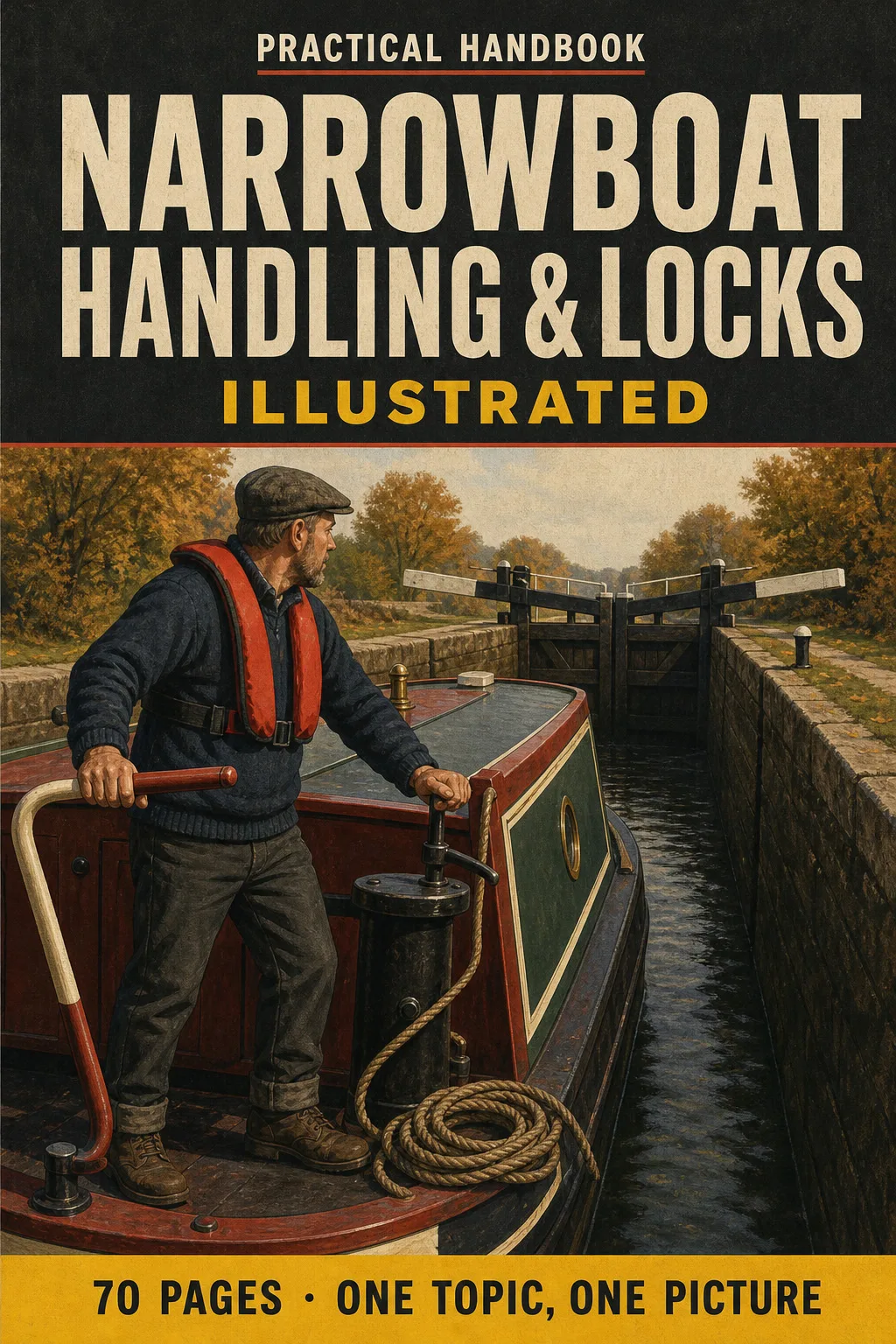
Narrowboat Handling & Locks Illustrated: Steering, Mooring and Every Lock in Drawings Every Lock in the Same Order

Steering and the stern swing, mooring and knots, narrow and broad locks, staircases, swing bridges, tunnels, rivers and safety on board. Every topic has its own page: the drawing first, then what you need to remember. 70 illustrated pages.

YES, I WANT EVERY LOCK DRAWN

🔒 Secure checkout · PDF by email · 30-day guarantee

Every topic, its own pageEach manoeuvre and lock step drawn, with the explanation alongside
70 illustrated pages9 parts, from the narrowboat drawn from above to crew signals at a glance
Up-to-date sourcesCanal & River Trust Boater's Handbook and current guidance, plus Environment Agency river guidance
PDF by emailFormat

Look Inside the Book

Every page has one big drawing and a box with the steps and rules you need at the tiller and at the lock side:

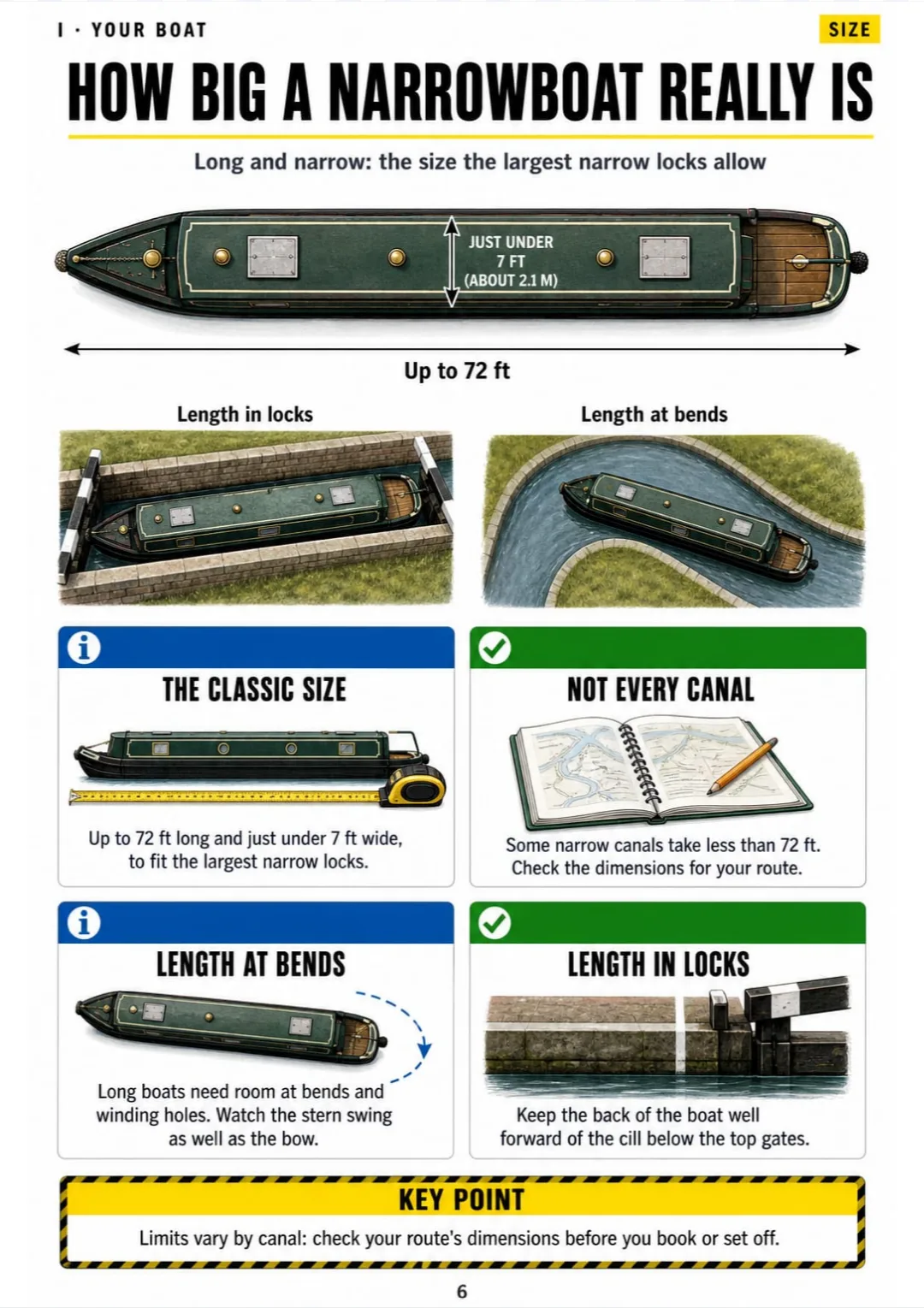
Up to 72 ft x 7 ft (21.95 m x 2.13 m), but check your route
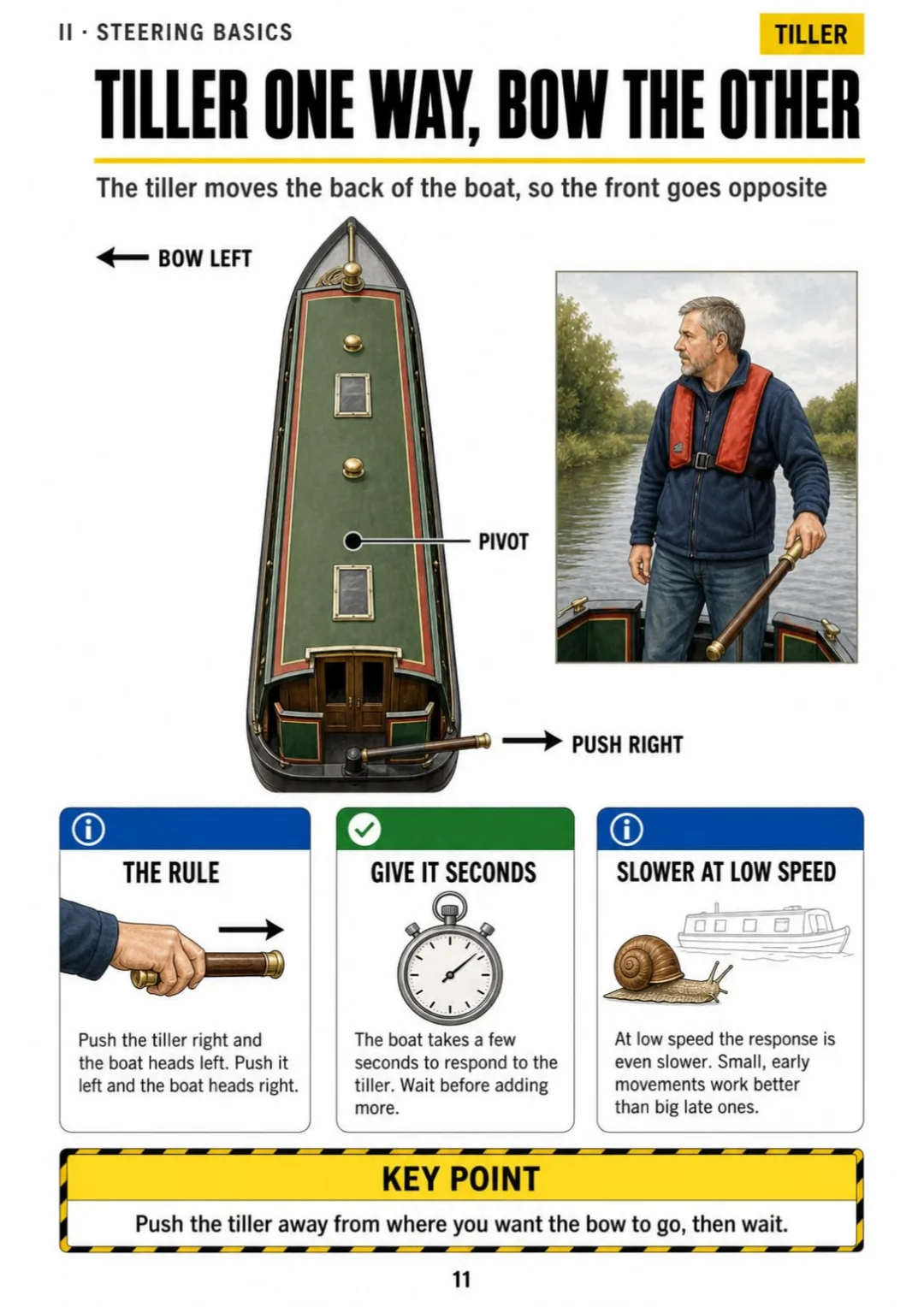
Tiller right, bow left, and the boat needs a few seconds to answer.
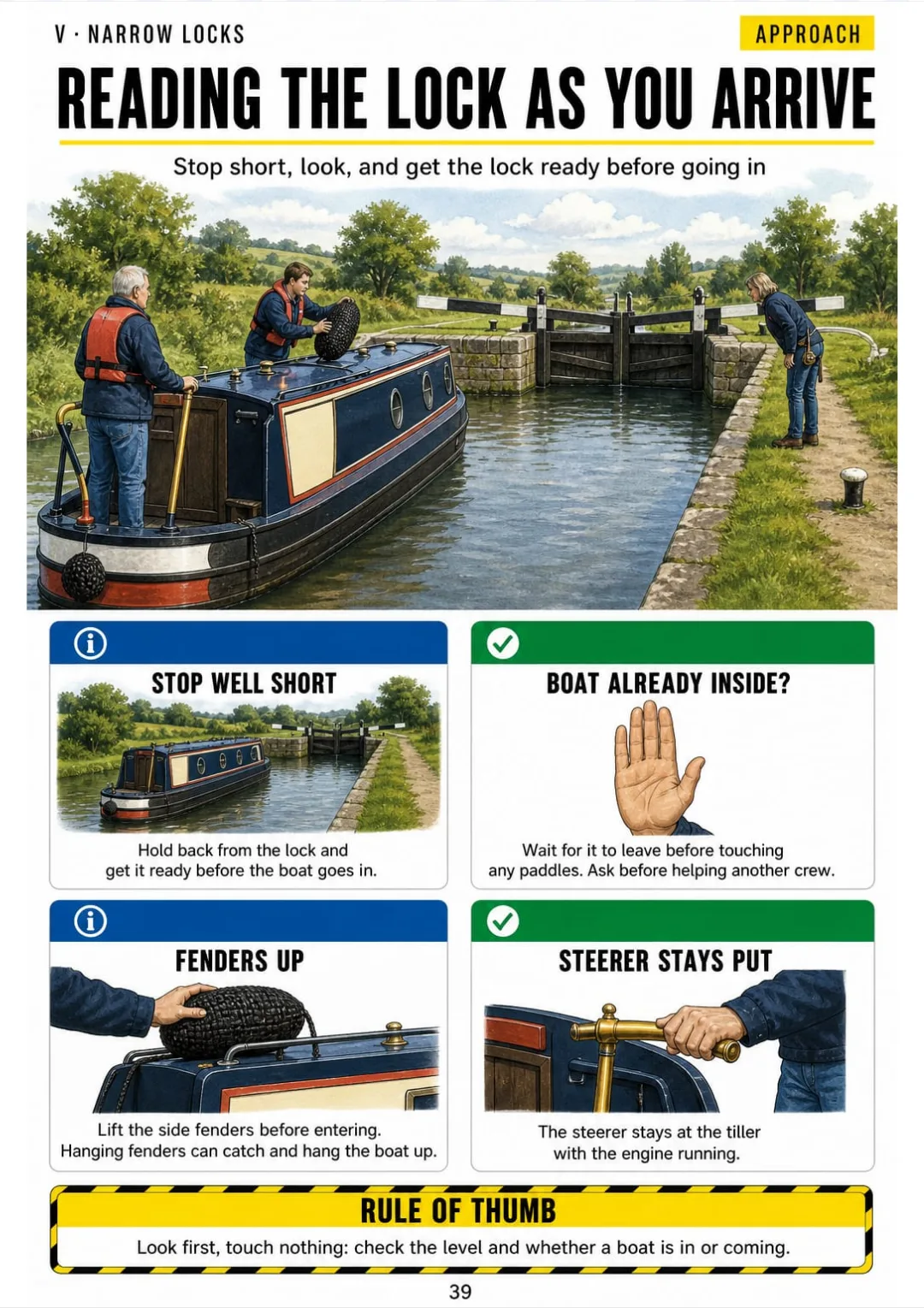
Stop short, fenders up, steerer at the tiller, and never touch paddles while a boat is inside.
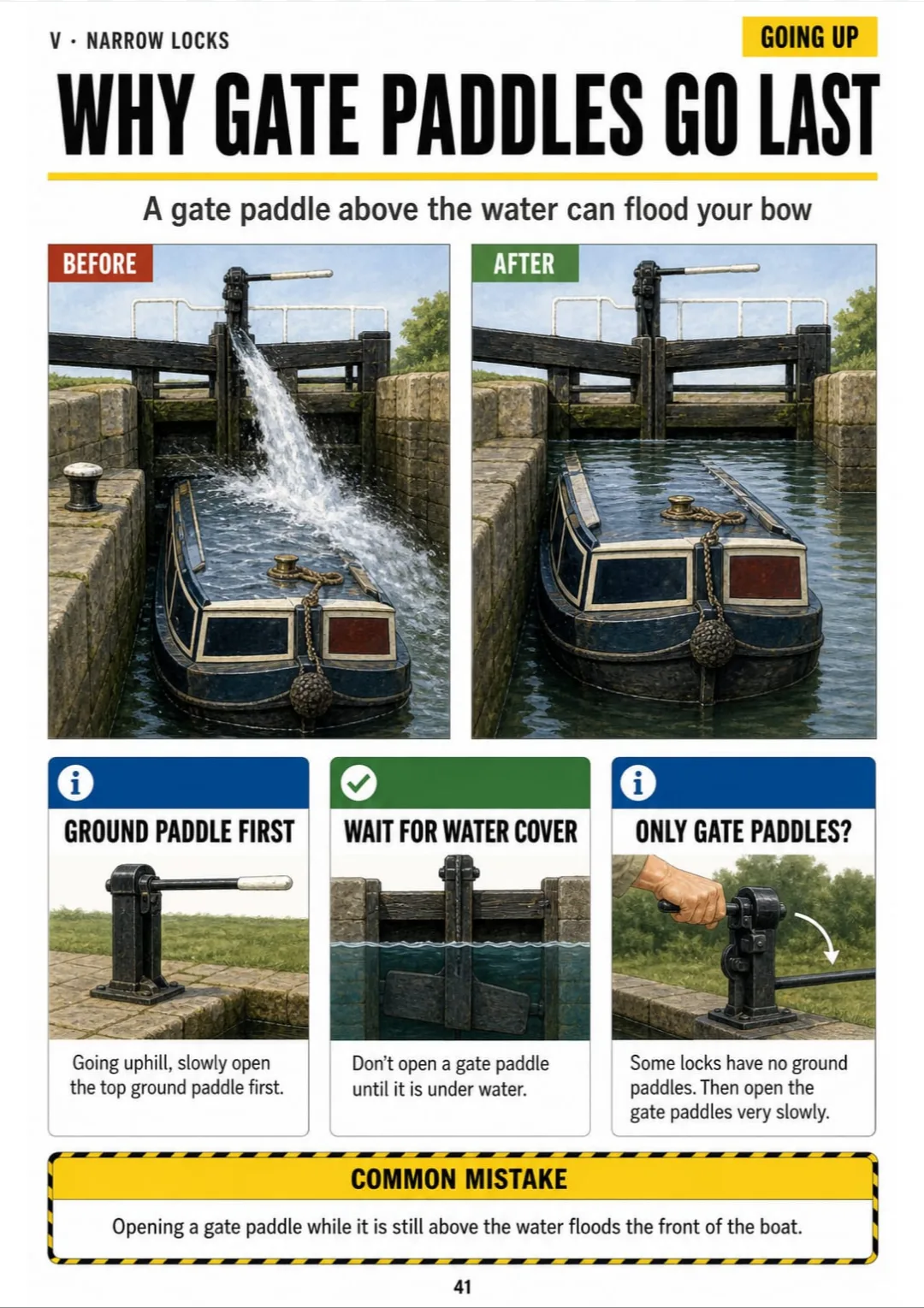
Ground paddles first; gate paddles only once they are under water.
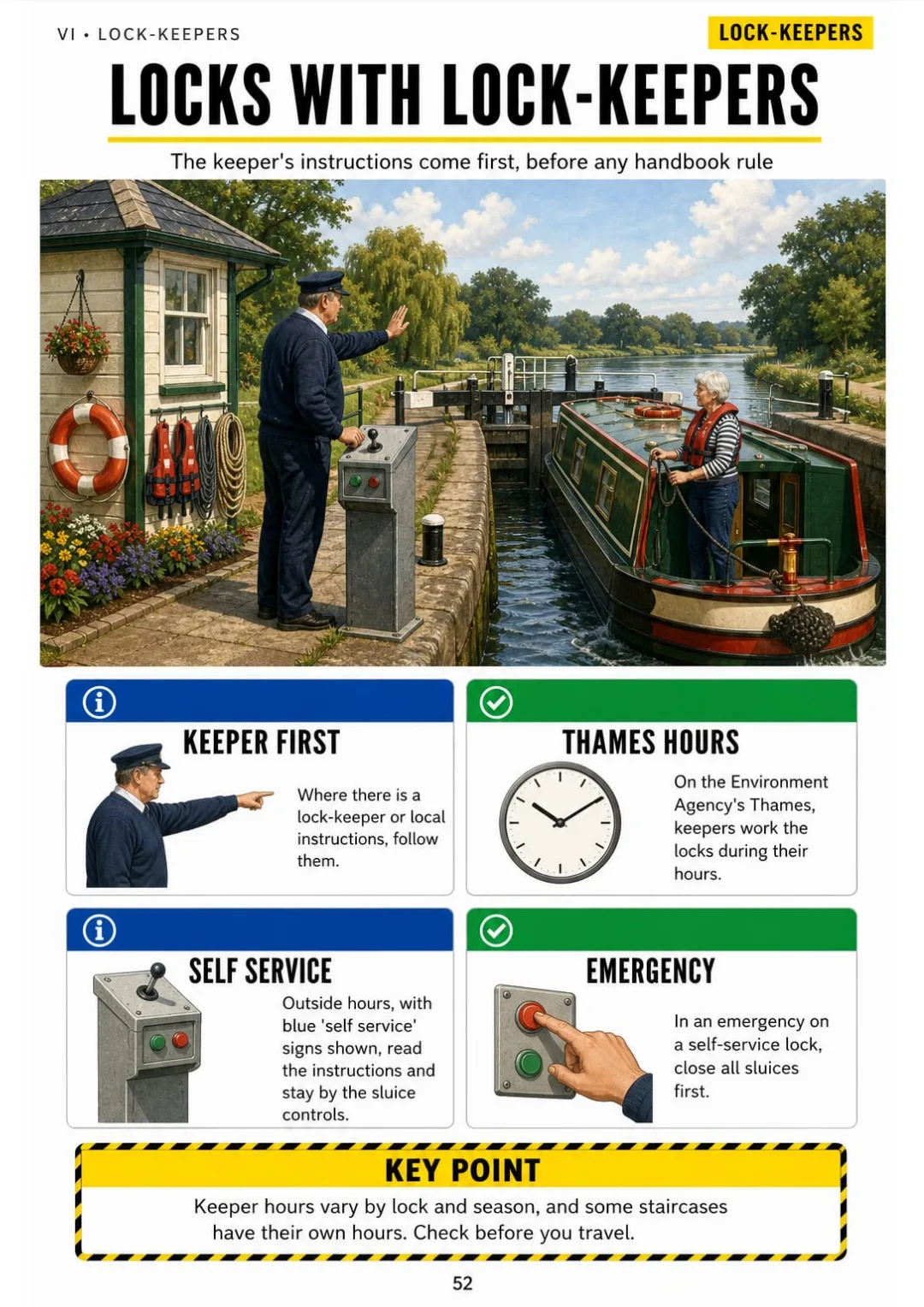
Lock-keeper present? Follow their instructions; self-service only when the blue signs show.
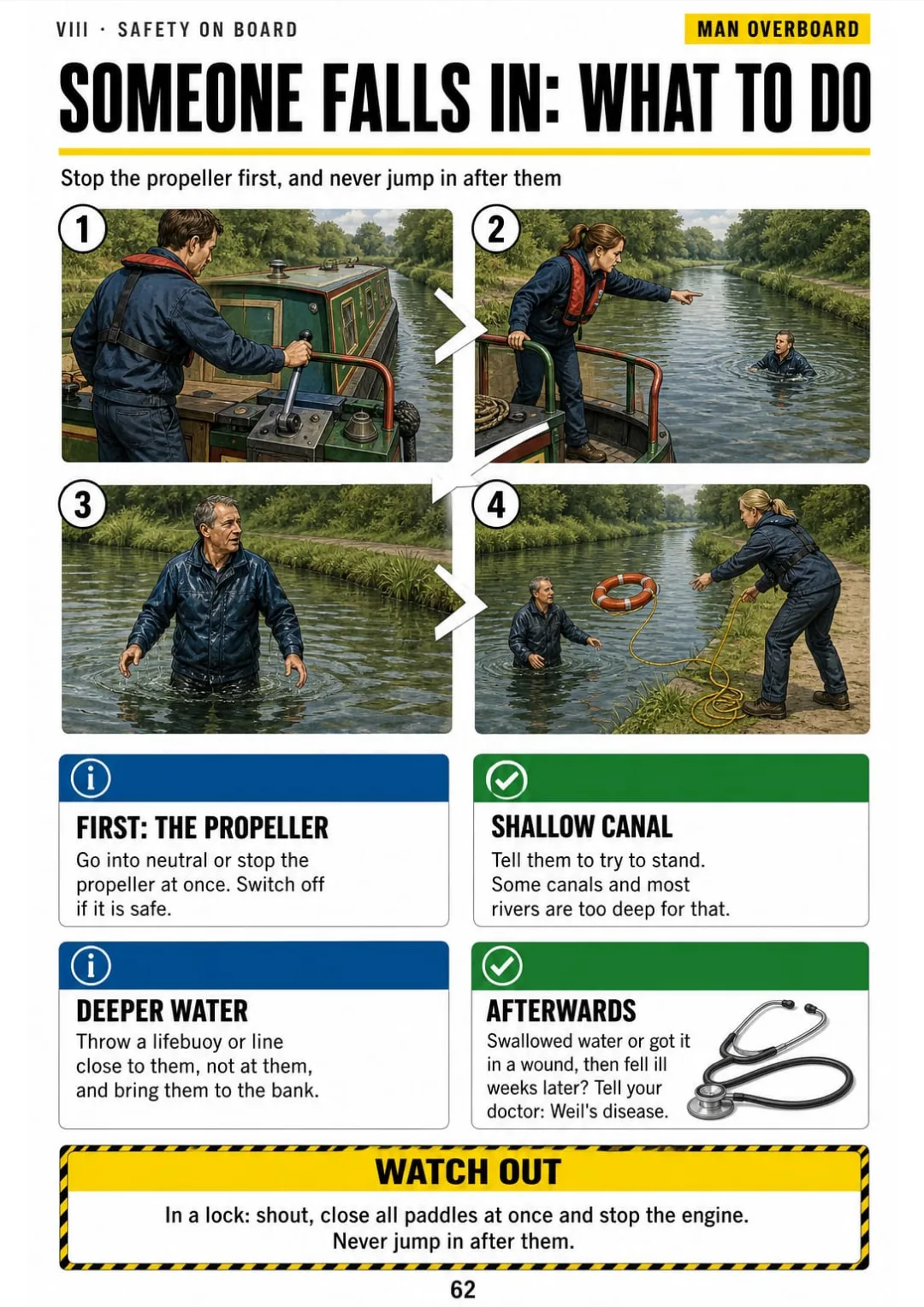
Falling in: neutral first, never jump in, lifebuoy close, not at them
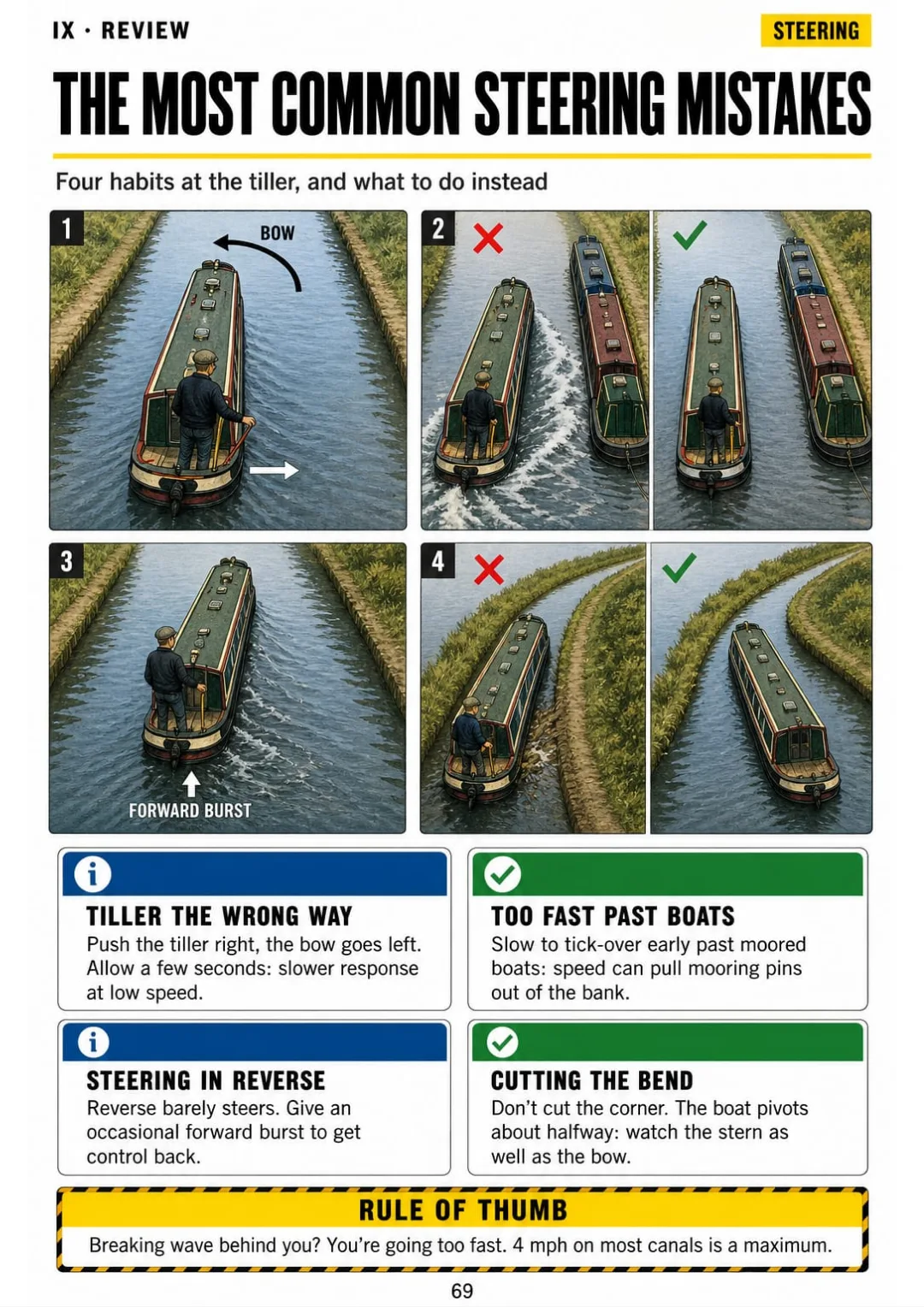
Tiller, speed, reverse and bends: four mistakes and their fix
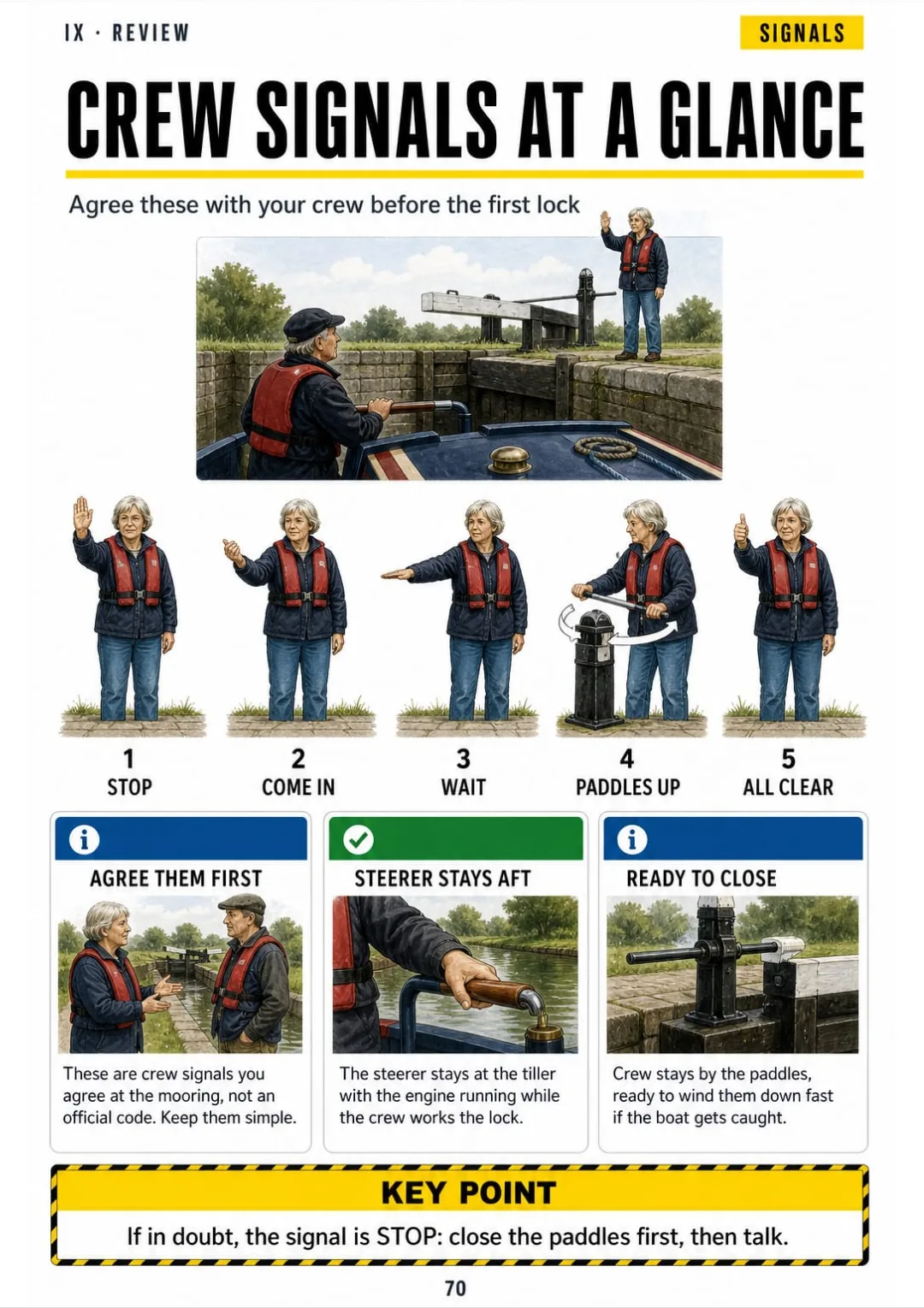
Stop, come in, wait, paddles up, all clear: five signals drawn

Swipe to see more →

These are real pages from the book. The table of contents is the full one: 9 parts and 66 topics.

The Problem Isn't You. It's How It Was Explained.

You're at your first lock with the windlass in your hand, a boat waiting below and people on the bridge watching. You can't remember which paddles to wind first.

At the hire base it was half an hour of talk, and the leaflet explains it in paragraphs: ground paddles, gate paddles, top gates, bottom gates. Plenty of words, nothing to picture.

Stop short, fenders up, steerer at the tiller, and never touch paddles while a boat is inside.

In the book, how a lock works is one page: the chamber drawn from the side, top paddles as the taps, bottom paddles as the plughole, and one rule in a box: never open both at once.

The same goes for the stern swing, the cill, staircase locks, mooring on the centre line and lining up for a bridge hole: each one has its own page.

You see the picture, you understand why it works, and you work the lock without reaching for the leaflet.

COMPARE FOR YOURSELF

The Same Topic, Two Ways to Learn It

THIS
  • The handbook: line after line
  • Tiller and stern swing explained in words alone
  • You reach the first bend still unsure
The narrowboat is steered by means of a tiller connected to the rudder at the stern. Movement of the tiller to starboard causes the rudder blade to deflect to port, as a result of which the stern is displaced to starboard and the bow consequently turns to port about a pivot point located towards the stern. The response of the vessel is not immediate, owing to its considerable mass and the limited flow of water over the rudder at low speed, and the steerer should therefore anticipate each change of heading well in advance.
FOR THIS
  • The tiller and the bow in one drawing
  • The rule in a box: tiller right, bow left
  • You see it and you get it
Tiller right, bow left, and the boat needs a few seconds to answer.
CONTENTS

Take a Look at the 9 Parts and 66 Topics

Your boat and the canal, steering, bends and turning, mooring and ropes, narrow locks, broad locks and staircases, bridges, tunnels and rivers, safety on board, and checklists: 70 pages, all illustrated

IYour Boat and the Canal · pp. 5-10
  1. The narrowboat drawn from above
  2. How big a narrowboat really is
  3. The canal from above
  4. Boat paperwork and insurance
  5. The 4 mph rule and why you go slower
  6. Your crew: who does what
IISteering Basics · pp. 11-19
  1. Push the tiller, the bow goes the other way
  2. The stern swing
  3. Forward, neutral, reverse
  4. Reverse barely steers
  5. Stopping: there are no brakes
  6. Looking where you are going
  7. Keep to the right when you meet a boat
  8. Passing moored boats
  9. Overtaking and being overtaken
IIIBends, Bridges and Turning · pp. 20-26
  1. Taking a bend
  2. Blind bends and the horn
  3. Lining up for a bridge hole
  4. Wind on a narrowboat
  5. Turning round in a winding hole
  6. Running aground
  7. Sound signals
IVMooring and Ropes · pp. 27-35
  1. Where you can moor and where you cannot
  2. Coming in to moor
  3. The centre line
  4. Bow and stern lines
  5. Mooring pins and spikes
  6. Bollards, rings and piling
  7. Round turn and two half hitches
  8. The cleat hitch
  9. Coiling and stowing ropes
VNarrow Locks Step by Step · pp. 36-45
  1. How a lock works
  2. The windlass
  3. The cill: the danger you cannot see
  4. Reading the lock as you arrive
  5. Going up: the sequence
  6. Why gate paddles go last going up
  7. Going down: the sequence
  8. Holding the boat in the lock
  9. Leaving the lock as you should
  10. Lock landings
VIBroad Locks, Staircases and Flights · pp. 46-52
  1. Broad locks: one boat or two
  2. Sharing a lock
  3. Staircase locks: the rule
  4. Staircase locks: why it goes wrong
  5. Lock flights
  6. Low pounds
  7. Locks with lock-keepers
VIIBridges, Tunnels and Rivers · pp. 53-60
  1. Swing bridges
  2. Lift bridges
  3. Tunnels: before you enter
  4. Tunnels: inside
  5. Aqueducts and embankments
  6. Joining a river
  7. River conditions boards
  8. Steering on a river
VIIISafety on Board · pp. 61-65
  1. Lifejackets: who and when
  2. Falling in
  3. Fire and carbon monoxide
  4. Weed hatch safely
  5. Moving around the boat
IXReview and Checklists · pp. 66-70
  1. Before you set off: checklist
  2. Every lock in the same order
  3. The most common mistakes at locks
  4. The most common steering mistakes
  5. Crew signals at a glance

One Page, One Topic, All Clear

Think of it this way:

You round a bend and the lock is right there. Your partner steps off with the windlass, a boat is already on the landing, and you both need to know the next step without talking it through.

You open the page for going up and see the lock drawn from above, with the five steps numbered in order: approach, enter, gates, paddles, leave.

Lock-keeper present? Follow their instructions; self-service only when the blue signs show.

Same with the stern swing, the cill, the centre line, swing bridges and tunnels: each one on its own page.

Narrowboat Handling & Locks Illustrated is 9 parts and 66 topics, all drawn, with checklists, the most common mistakes and crew signals at the end.

What you see drawn, you don't have to memorize.

What's Inside Narrowboat Handling & Locks Illustrated:

Ipp. 5-10

Your Boat and the Canal

The narrowboat drawn from above, how big it really is, the canal from above, the paperwork every boat needs, the speed limit and why you go slower, and who in the crew does what.

IIpp. 11-19

Steering Basics

Tiller one way and bow the other, the stern swing, forward, neutral and reverse, stopping with no brakes, keeping right and passing or overtaking other boats.

IIIpp. 20-26

Bends, Bridges and Turning

Taking a bend, blind bends and the horn, lining up for a bridge hole, wind, turning in a winding hole, running aground and sound signals.

IVpp. 27-35

Mooring and Ropes

Where you can and cannot moor, coming in to moor, the centre line, bow and stern lines, pins, rings and piling, and the knots you actually use.

Vpp. 36-45

Narrow Locks Step by Step

How a lock works, the windlass, the cill, reading the lock as you arrive, the sequences going up and going down, holding the boat and lock landings.

VIpp. 46-52

Broad Locks, Staircases and Flights

Broad locks with one boat or two, sharing a lock, staircase locks and why they go wrong, flights, low pounds and locks with lock-keepers.

VIIpp. 53-60

Bridges, Tunnels and Rivers

Swing and lift bridges, tunnels before you enter and inside, aqueducts and embankments, joining a river, conditions boards and steering on a river.

VIIIpp. 61-65

Safety on Board

Lifejackets, what to do if someone falls in, fire and carbon monoxide, the weed hatch and moving around the boat safely.

IXpp. 66-70

Review and Checklists

The checklist before you set off, every lock in the same order, the most common mistakes at locks and at the tiller, and crew signals at a glance.

At the end of the book: A checklist before you set off, every lock on one page, the most common mistakes and crew signals at a glance.
Plus: 2 Free Books

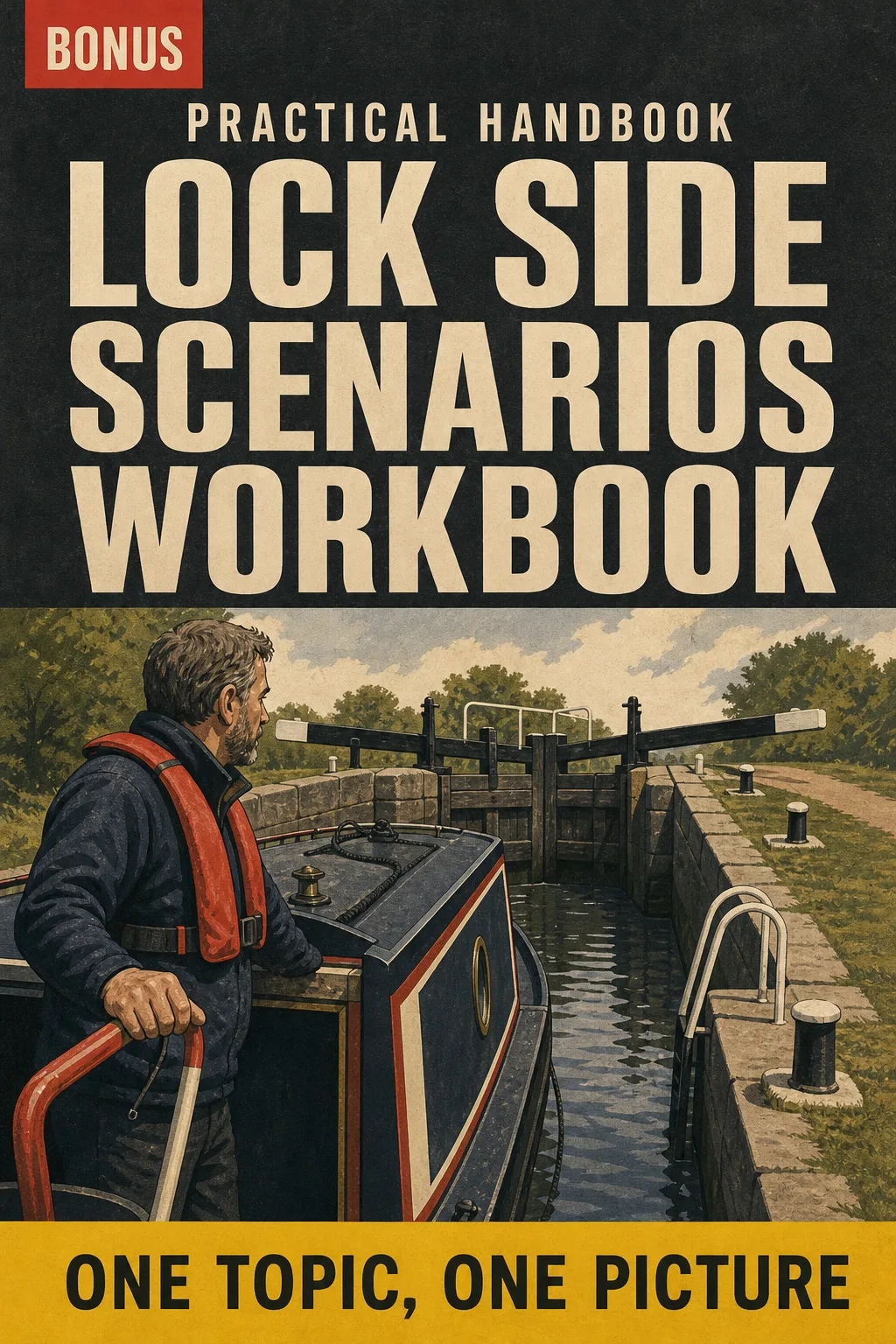
Lock Side Scenarios Workbook

BONUS 1: «Lock Side Scenarios Workbook»

Value on its own: US$ 17.90

Practise real situations at home (a boat waiting below, a paddle left up, wind on the bend) and check your answer, so the first real lock is not your first try.

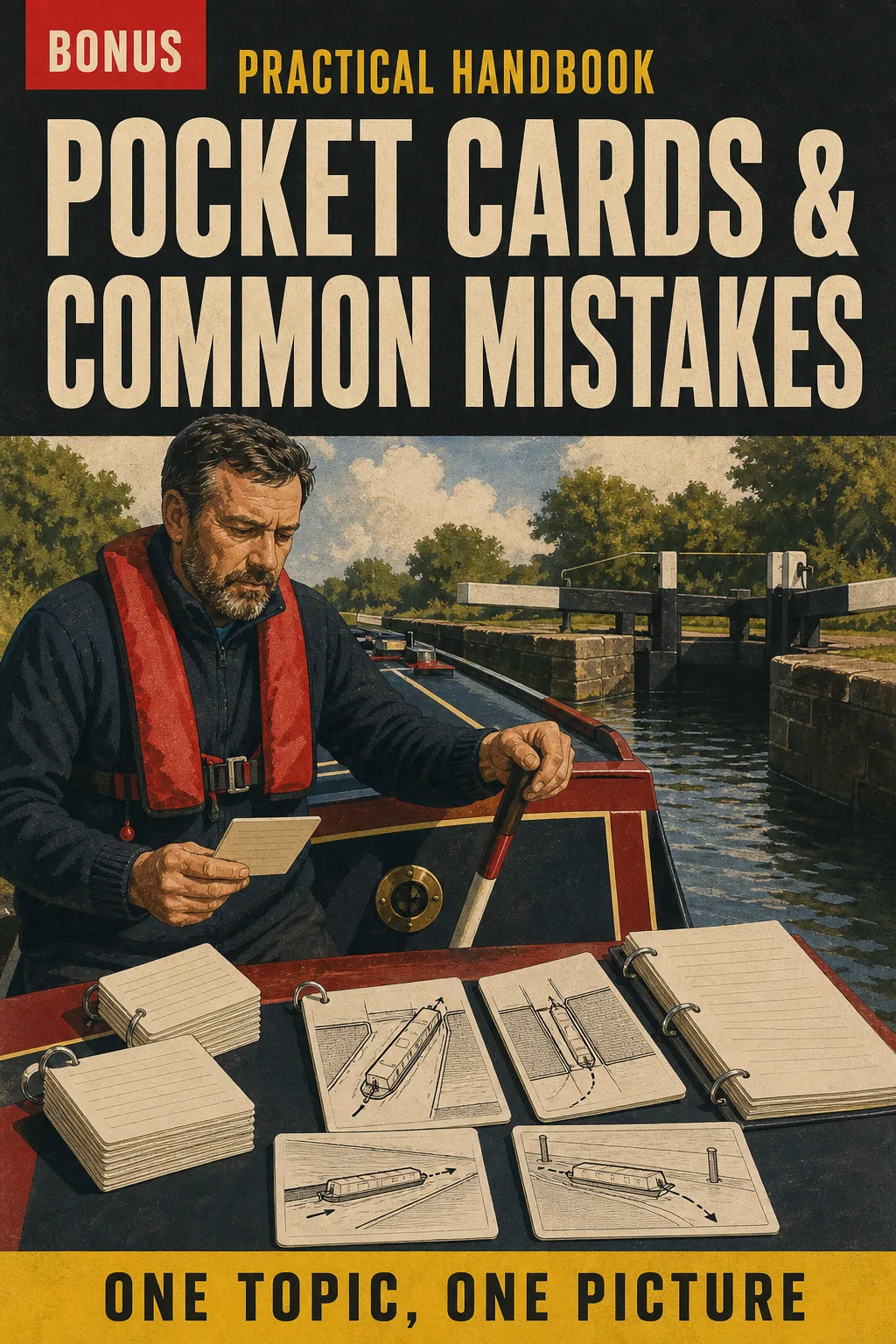
Pocket Cards & Common Mistakes

BONUS 2: «Pocket Cards & Common Mistakes»

Value on its own: US$ 14.90

Print the lock sequences, knots and crew signals as cards for the cratch, plus the most common mistakes drawn before and after, to check at a glance.

Narrowboat Handling & Locks Illustrated with 2 Free Books

  • Narrowboat Handling & Locks Illustrated: 70 illustrated pagesUS$ 63
  • BONUS 1: Lock Side Scenarios WorkbookUS$ 17.90
  • BONUS 2: Pocket Cards & Common MistakesUS$ 14.90
  • High-resolution PDF to printIncluded
Total value US$ 95.80
YOUR PRICE:
US$ 27
You save US$ 68.80
YES, I WANT NARROWBOAT HANDLING & LOCKS ILLUSTRATED FOR US$ 27

📄 This is a digital PDF book sent to your email: nothing is printed or shipped.

Secure purchaseEncrypted payment30-day guarantee

PDF by email: We email you Narrowboat Handling & Locks Illustrated as a PDF, together with the two free books. It's a single payment: no installments, no extra charges.

Who This Book Is For

You've booked a hire boat

You've booked a hire boat

Read the steering and lock pages before you go, so the handover on the pontoon becomes a reminder, not your first lesson.

Your first season is coming

Your first season is coming

Every lock, bridge and tunnel in the same order, plus printable cards for the cratch, so the whole crew knows its job from the first lock.

You already own a narrowboat

You already own a narrowboat

Check the stern swing, the cill and staircase locks at a glance, and keep the book on board for the moment you're not sure.

Everything You Get Today

US$ 95.80US$ 27
YES, I WANT NARROWBOAT HANDLING & LOCKS ILLUSTRATED FOR US$ 27

📄 This is a digital PDF book sent to your email: nothing is printed or shipped.

30DAYS
GUARANTEE

30-Day Guarantee

Try Narrowboat Handling & Locks Illustrated for 30 days, bonus books included.

We refund everything if the file won't open, if the book isn't what you see here, if you were charged twice or if the email doesn't arrive. Just email us.

You pay once. No subscriptions.

Frequently Asked Questions

Is it for me if I've never steered a boat, or if I already own one?

Both. It starts with the boat drawn from above and goes step by step to staircases, tunnels and rivers. If you already own one, it's the page to check when you're not sure.

Where does the content come from?

It's checked against the Canal & River Trust Boater's Handbook and its current guidance for canals in England and Wales, and Environment Agency guidance for its river navigations. The Broads, Scottish canals and the tidal Thames have their own rules: check them with their navigation authority. Rules that can change are marked so you can check the current version.

Is it official material?

No. It's an independent illustrated guide. It isn't published, approved or endorsed by any navigation authority, and it doesn't give you a certificate or qualification.

Does it replace the hire-base handover or hands-on tuition?

No. The handover shows you once, and a video is no use with a windlass in your hand. This book is the same steps drawn, in the same order, to read before you go and keep on board when you're not sure. It doesn't replace the handover, hands-on instruction or the current safety advice from the navigation authority.

Are the practice scenarios taken from a course or test?

No. The lock side scenarios are written for this book, to practise at home and check your answer.

When and how does it arrive?

As a PDF by email, together with the 2 gift books, to the address you enter at checkout.

Do I have to pay every month?

No. It's a one-off payment.

Can I have it on paper?

Yes. It's a PDF ready to print, so you can keep it on board, and the pocket cards are made to print for the cratch.

How does the refund work?

You have 30 days. We refund everything if the file won't open, if the book isn't what you see on this page, if you were charged twice or if the email doesn't arrive: just email us.

Before You Close This Page

No more rereading the leaflet with nothing sticking.

The lock sequence is drawn, step by step.

You reach the lock knowing where everything is.

Drawings make studying faster.

The book is right below.

One-time payment: US$ 27 · Guarantee: 30 days · PDF by email

YES, I WANT NARROWBOAT HANDLING & LOCKS ILLUSTRATED FOR US$ 27

📄 This is a digital PDF book sent to your email: nothing is printed or shipped.